| Photo by Craig Benner |
| Photo by Craig Benner |

You, too, can learn bobbin lacemaking during Marian’s Winter Institute class. The bobbin lace class meets on Saturday and Sunday, February 18 & 19, 2012. Saturday’s class runs from 9:00 AM to 4:30 PM and Sunday’s class starts at 1:00 PM and lasts until 4:30 PM. Cost for Landis Valley Associates members is $152 and the cost for non-members is $160. Materials fees will be extra. For more information, either visit the calendar on our website, http://www.landisvalleymuseum.org/, or call Museum Educator Tim Essig at 717-569-5783.
Kyle Hake and George Weston of the Maintenance Department reported that three large trees came down: a locust behind the one-room school house, a pine behind the hotel, and a smaller, decorative tree next to the log. One also came down on the neighboring Hands-on House’s property. “It took me and George two and a half full days to clean up all the debris,” Kyle said. “We were lucky. Last hurricane, the tree next to the Brick [House] fell on the roof. But that was addressed right away.”
The trunks and limbs, deemed useless for burning in the bake ovens around the museum, were tossed into a large pile in the pasture behind the schoolhouse.
According to Farm Manager Joe Schott, the animals and the plants carrying precious heirloom seeds weathered far better. “The corn was blown over but the seed stock is fine. It was mature enough to harvest anyway. The plants are fine,” he said.
But, while the ground was able to soak up the hurricane’s torrential rains, downpours today subjected Landis Valley to another form of damage from the leftovers of Tropical Storm Lee: flooding. The pictures below tell a story of Hay’s Creek, which runs along the side of the Collections Gallery. In my time, there was a hay field, formerly owned by the Landis’s who occupied the Isaac Landis House, in what is now the parking lot. In these pictures, one can see that the pipes running beneath both the parking lot and Landis Valley Road are not designed to carry the copious amounts of water draining from the surrounding countryside. The water backs up and overflows, pooling up to two feet in some places. Our fearless leader, Jim Lewars, and Maintenance Manager Will Morrow braved the flood in the Kubota in the pictures below. Floods like this don’t happen often, but when they do it is quite spectacular.
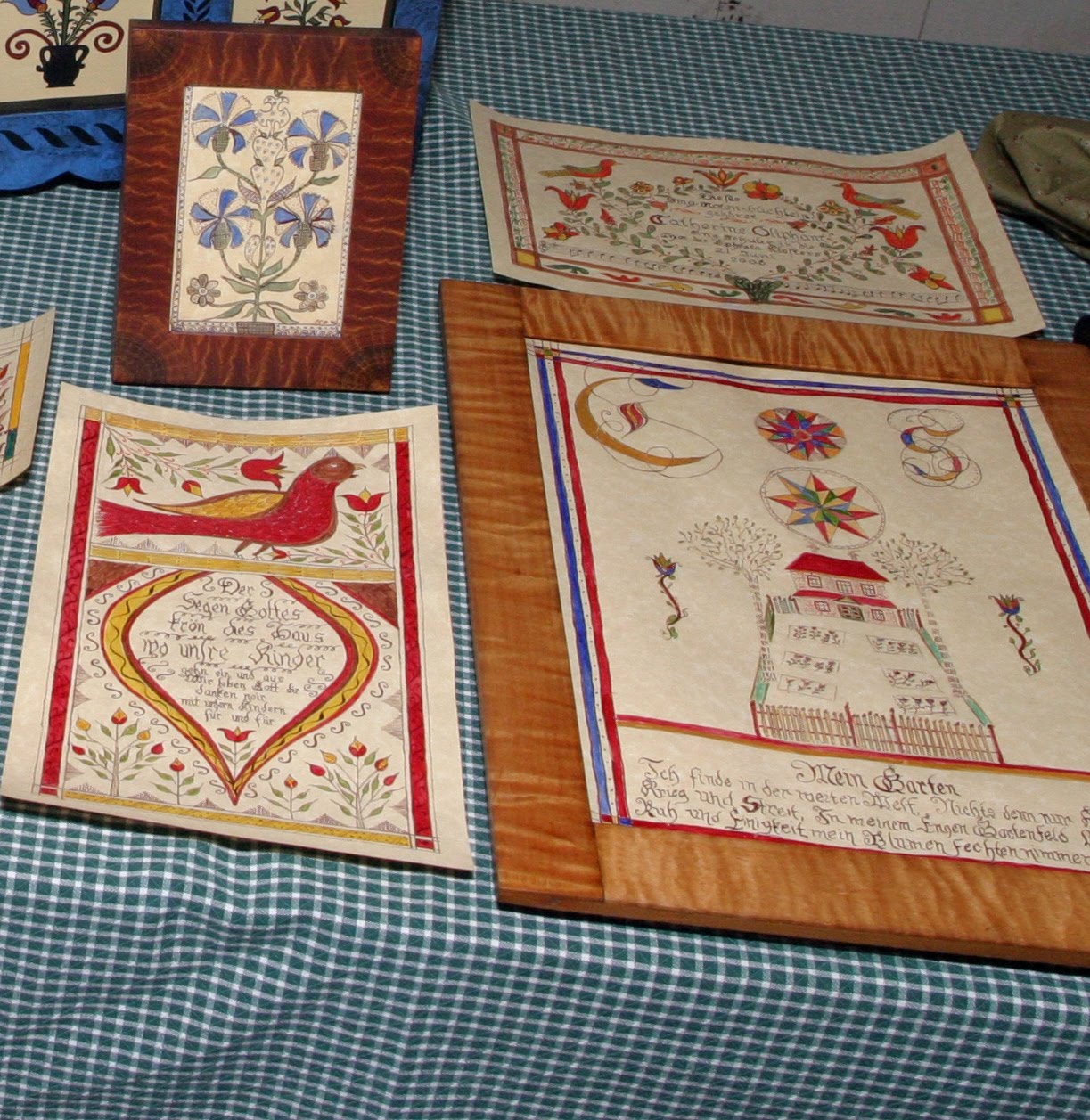
As part of our original vision for Landis Valley Village and Farm Museum, or “Landis Valley Barn Museum,” as we once called it, visitors can often see tools used to do the chores commonly done by Pennsylvania Germans around our home, as well as the art created and games played in leisure time. Washboards, yokes and buckets, scherenschnitte, clothing irons, and fraktur all have a place in the collection. Visitors are not to touch them, though. Just look, possibly smell, and quietly imagine the lives revolving around these artifacts.
There are some days during the year when these artifacts star in an interactive experience, Hands-On History Days, when the past imprints itself onto the memory and our visitors come away with a renewed appreciation for the modern way of life. On August 2, from 10 a.m. until 3 p.m., Landis Valley invites all of our visitors, not just the children, to get your hands dirty and wash linens on a washboard, carry water on a yoke, fill a mattress, help with the quilting and the ironing, and still have time to take lessons at the one-room schoolhouse. Those who get their chores done can pass some leisure time playing games like Hoop and Stick or Grace, taking a wagon ride, or quietly indulging in the creation of keepsakes like fraktur and scherenschnitte.
Hands-On History Days are an homage to where we are today by dealing a firm dose of the labors and pleasures of yesterday. Look at the artifacts with an impartiality begotten by modern society now, then study them after your chores are done with an appreciation of the hard work it took to wash clothes, stuff a mattress, or create a beautiful fraktur. Then relax and let the horses carry you on a leisurely wagon ride around my beautiful home.
Students from all over the USA and Canada flocked to Landis Valley last week for the 55th Annual Summer Institute for Rural Life. For four days, the valley was a-buzz as students learned how to make a moonshine still, a leather fire basket, herbal medicines, an iron trivet, wall hangings in both scherenschnitte (paper cutting) and fraktur (PA German calligraphy), a basket, a tin chandelier, carved wood figures, and bread and pies—lots and lots of bread and pies. Others learned to drive wagons and to keep dairy cows happily producing lots of milk. Still others went off-site to learn about the historic Oley Valley or to tour beautiful gardens, mills, or houses and barns normally not shown to the public. “We learned how to maintain the fire. Also shaping, riveting, and welding,” said Vinny, a blacksmithing student from nearby in Lancaster. Beside him were rested a trivet and camp fork, made at the portable forge across the lane from the blacksmith shop.
He learns the craft plied by my ancestor, Jacob Landis Sr., whose blacksmith shop once stood at about the same spot that the current one stands today.
Further along, in the bright yellow Isaac Landis House, was the scherenschnitte class, where students sat at long tables strewn with pieces of paper, scissors, and memories. Many of them have come back repeatedly, such as Nina, of Bensalem, PA. She’s been coming for ten years to practice her craft and to re-learn the patience it takes to keep it up. “We had a good class on scherenschnitte. We learned a lot, made good friends, had excellent teaching, and, as always, it was good to come back to institute to meet—or re-meet—people that we’ve met in the past and become friends with,” she said.
There are some skills that cannot be learned from a book and need the careful supervision of a master. He looks over your shoulder, checks your work, and tells you how to salvage a project that would have been scrapped had you tried to learn on your own. She teaches you techniques that may be more efficient than you had previously learned, and then shows you how to display your piece. They provide the backup and patience that builds confidence. And all the while, they are passing down skills once common in my time here.
“I come back here for peace, every year,” says Lynn, a tinsmithing student from Horsham, PA. “And I achieve it.”
Next up for Landis Valley is the Tinsmith Convergence on Friday and Saturday, June 24 & 25. Tinsmiths and copper-smiths will demonstrate their trade and will exchange ideas and techniques at this gathering of masters. Anyone interested in these two crafts is welcome to come. Registration and admission information is on Landis Valley’s website, www.landisvalleymuseum.org, or go to www.tintinkers.org. You can also contact Timothy Essig at 717-569-5783 for more information.
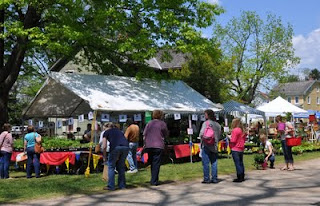
Naturally, the biggest draw was the wealth of plants for sale. Herbs, vegetables, roses, and annual and perennial flowers awaited new homes with eager gardeners. The Heirloom Seed Project, alone, anticipated selling roughly 10,000 plants, most of them tomatoes. As of now, they’ve come close to that number, too, between sales at the Herb Faire and sales from the wagon parked at the museum’s entrance.
It was an orderly chaos of new life condensed and celebrated in two days. Next up for the Valley is the 55th Annual Summer Institute for Rural Life, from June 14-17, where registered students will take trips to explore sites in the regions surrounding Landis Valley and learn many of the skills that were once common during my time here over a century ago. There are still openings for many of the classes and if you, too, would like to learn from the masters, please contact Karen Cunningham at 717-569-0401, extension 216.